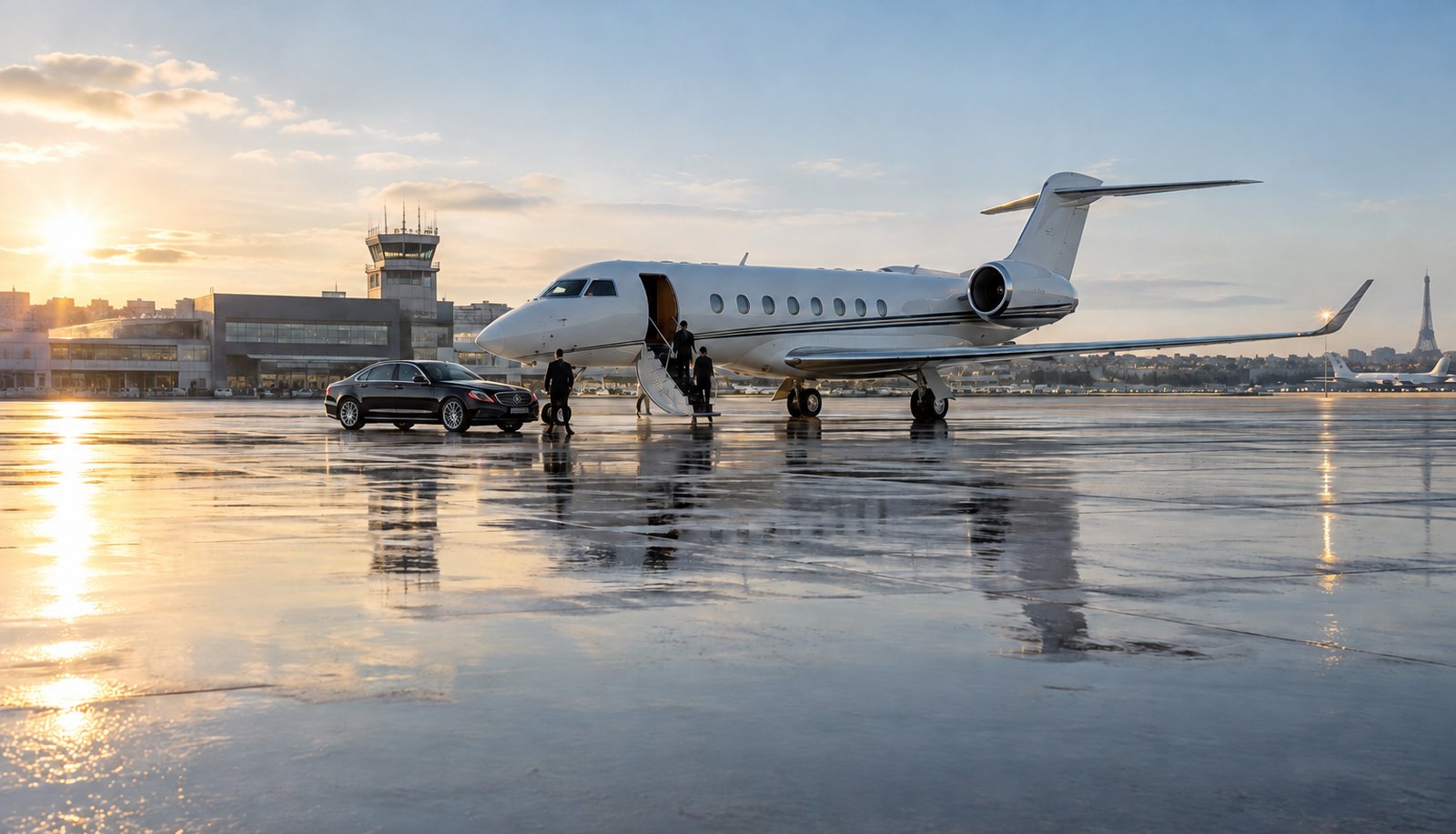
Flying private to Paris for Haute Couture week (January 25 to 28, 2027) and the men's shows: Le Bourget, the 10:15 pm departure rule, nonstop range, border checks and winter operations.

Paris fills up three weeks in a row in January 2027. The Maison&Objet design fair is scheduled for January 14 to 18 at Paris Nord Villepinte, minutes from Le Bourget. The men’s shows for Fall/Winter 2027 follow from Tuesday, January 19 to Sunday the 24th, and Haute Couture Spring/Summer 2027 runs from Monday, January 25 to Thursday the 28th. The Fédération de la Haute Couture et de la Mode has set the official dates, and they are the ones to plan around while the show-by-show calendar is awaited. Here is what decides the flight.
Le Bourget, and why there is no real alternative
Paris-Le Bourget is the busiest business aviation airport in Europe, and from the United States it is effectively the only choice. Customs and the border police are on duty around the clock, and in normal times no slot is needed: the French slot coordinator has managed Le Bourget only temporarily, for major events such as the 2024 Olympics, and nothing has been announced for January.
The other Paris airports close the door. The smaller fields of Toussus-le-Noble and Pontoise take no flights from the United States, and their weight limits rule out transatlantic jets anyway. Orly takes business aircraft only for passengers connecting to an airline. Charles de Gaulle has customs at all hours but requires a slot for every movement, and in practice it is the airport for the largest groups rather than for a party on a business jet.
Size is rarely a problem. Le Bourget accepts aircraft with a wingspan under 65 meters, so a VIP-configured Boeing Business Jet or ACJ320neo fits on the ramp. The airport bars scheduled airlines and larger commercial charters, while business jet charters are its everyday traffic. Handlers put the line at about 25 seats, above which a charter normally goes to Charles de Gaulle, so the seat count of a VIP airliner is worth checking before the trip is planned around Le Bourget.
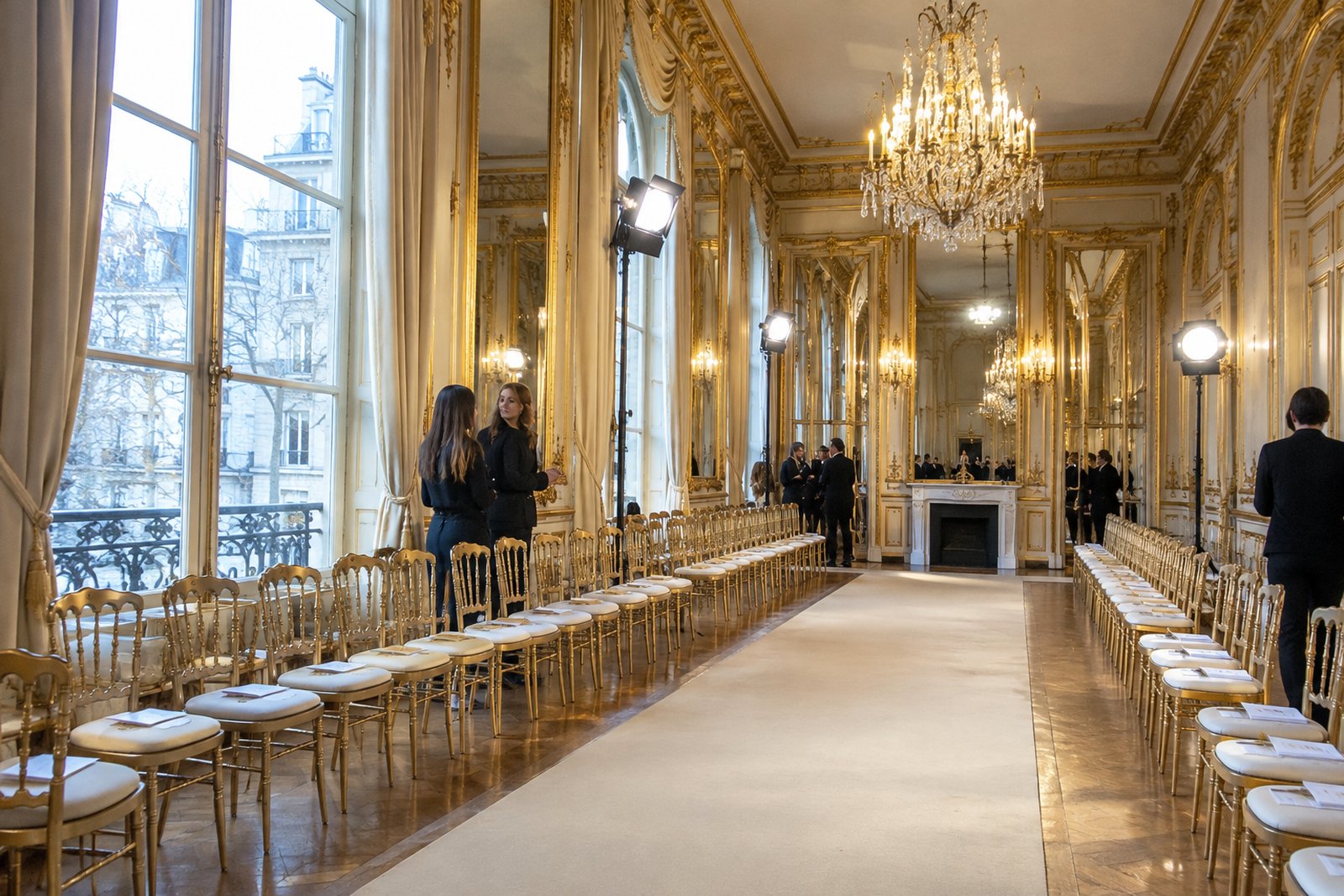
The 10:15 pm rule
Le Bourget has no full curfew, but it has one rule that shapes the end of every trip: no jet may leave its parking stand for take-off between 10:15 pm and 6 am, local time. Modern business jets can land through the night, so an overnight flight from New York touching down before 6 am is no problem. Leaving is another matter. A party that wants to fly home straight after the last show on Thursday the 28th must be off the stand by 10:15 pm, so a late dinner in town and a same-night departure rarely fit together, and the flight leaves the next morning.
The rule may tighten one day. Local councils and residents’ groups are asking for a full night curfew, and a public consultation on the airport’s noise plan closed on November 7. The draft plan proposes no new restriction, and for January the rules in force since 2011 apply.
How far it is, and how many pilots
Measured on the great circle, Teterboro to Le Bourget is about 3,160 nautical miles, within reach eastbound of large-cabin jets such as the Challenger 650. Palm Beach is about 3,940, which calls for a long-range aircraft such as the Falcon 7X or the G650. Van Nuys is about 4,900, the territory of the G700 and the Global 7500.
The flight home is the one to plan. In January the westbound leg runs into strong winter headwinds, so the return takes noticeably longer than the outbound flight, and an aircraft that crossed easily eastbound may need a fuel stop coming back. Under the U.S. charter rules, Part 135, a two-pilot crew may fly up to 10 hours in 24. On a trip from Los Angeles, the westbound return runs well past ten hours, which calls for a three-pilot crew with sleeping facilities on board. A three-pilot crew is capped at 12 hours aloft, so strong winds can push that leg to a four-pilot crew or a fuel stop. On a trip from Palm Beach, the westbound return can come close to the ten-hour line too. The operator confirms the nonstop, both ways, on the actual passenger list and the winds forecast for the week.
Fingerprints at the FBO, and still no ETIAS
Since April 10, 2026, the European Union’s Entry/Exit System has been fully operational. Every American visitor on a short stay is registered with a facial image and, from age 12, fingerprints on the first entry into the Schengen area, and is checked against them on later trips. At Le Bourget, crews reported in November that the checks now take place inside the FBO, and that waiting times depend on when border police are available there. On a busy morning of fashion week, allow for a wait at the FBO and keep the car on standby.
ETIAS, the travel authorization announced for visa-exempt visitors, is still not in operation. The European Union’s official site gives no start date and says it will announce one several months before launch, so there is nothing to file for a January trip. American visitors continuing to London usually need the United Kingdom’s Electronic Travel Authorisation; holders of a British or Irish passport do not.
Fog, de-icing and strikes
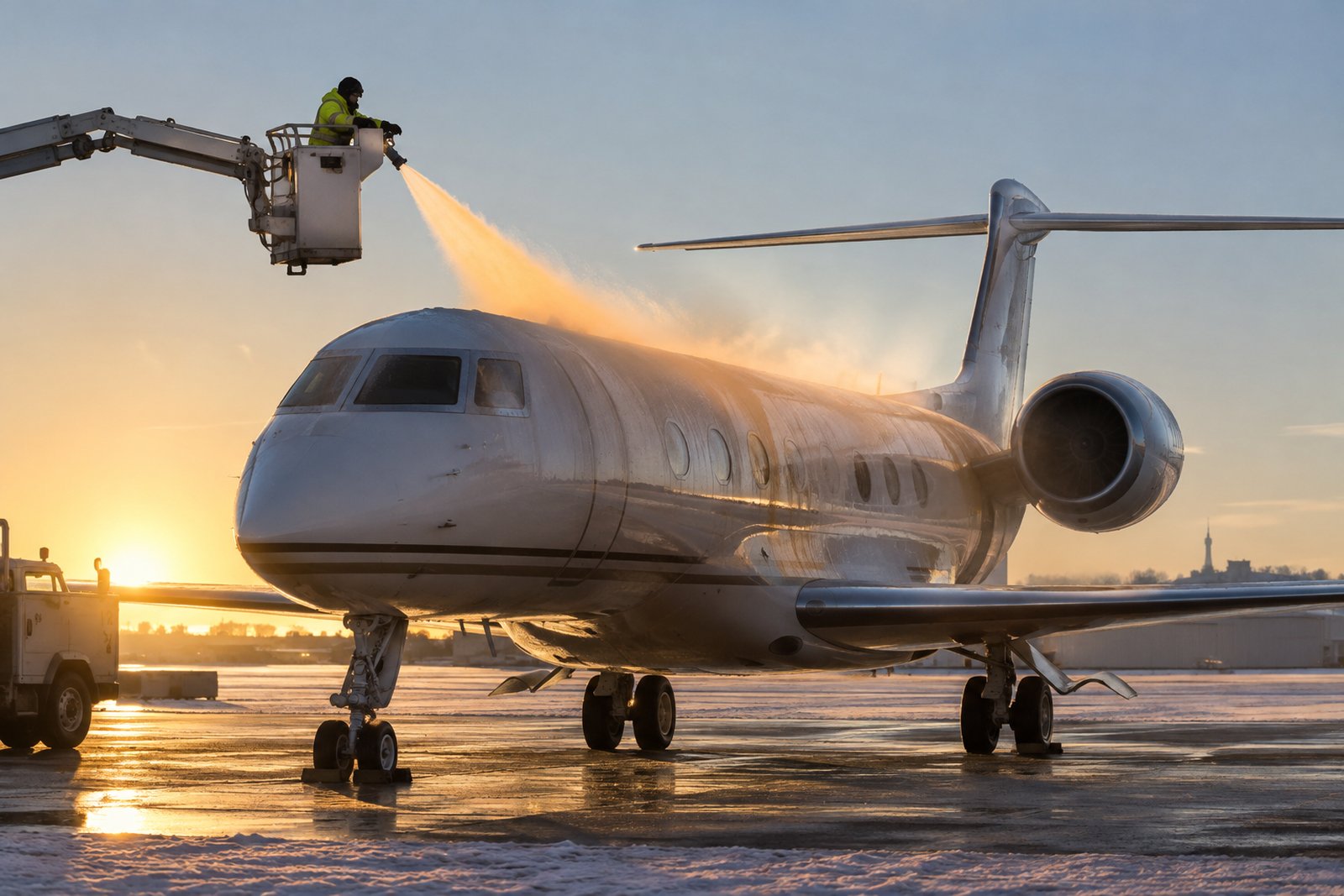
Morning fog is common in the Paris winter, and an early arrival is the one most exposed to holding or a diversion to another airport. De-icing at Le Bourget can mean queues of half an hour to an hour on a cold morning. For an early departure on a frosty morning, a hangar for the night before is worth asking about early: in dry frost, a jet that comes out of a heated hangar needs no de-icing and skips the queue, though falling snow, freezing rain or freezing fog still calls for treatment.
French air traffic control strikes are the other variable. Under a 2023 law each controller who intends to strike must declare it by noon two days before, so there is some warning, but not much. A day of strike reduces capacity across French airspace. It is a reason to keep one spare day on either side of the shows rather than fly in on the morning of a key appointment.

Plan it now
For the men’s shows from January 19 and the couture week from the 25th, the aircraft, any extra pilots and the FBO are best settled before the holidays, with the return planned around the 10:15 pm rule. If the trip continues to the mountains after Paris, our Alps guide covers Courchevel, Gstaad and St. Moritz, and our autumn Europe guide explains the border system in more detail.
Write to us at sales@transworldjets.com or request a quote with the dates, the departure city and the number of passengers, and we will tell you which aircraft can make the crossing both ways and how we would time the return.
Evan Grossman
Evan Grossman is the President of Trans World Jets, a private aviation brokerage based in Jupiter, Florida. With over two decades of experience arranging charter flights for corporate executives, families, and government clients worldwide, Evan specializes in complex logistics, medical evacuations, and VIP airliner charter. He founded Trans World Jets in 2011.
Planning your own charter?
Every mission is different. Reach out for a personalized quote from a broker who handles flights like these every day.