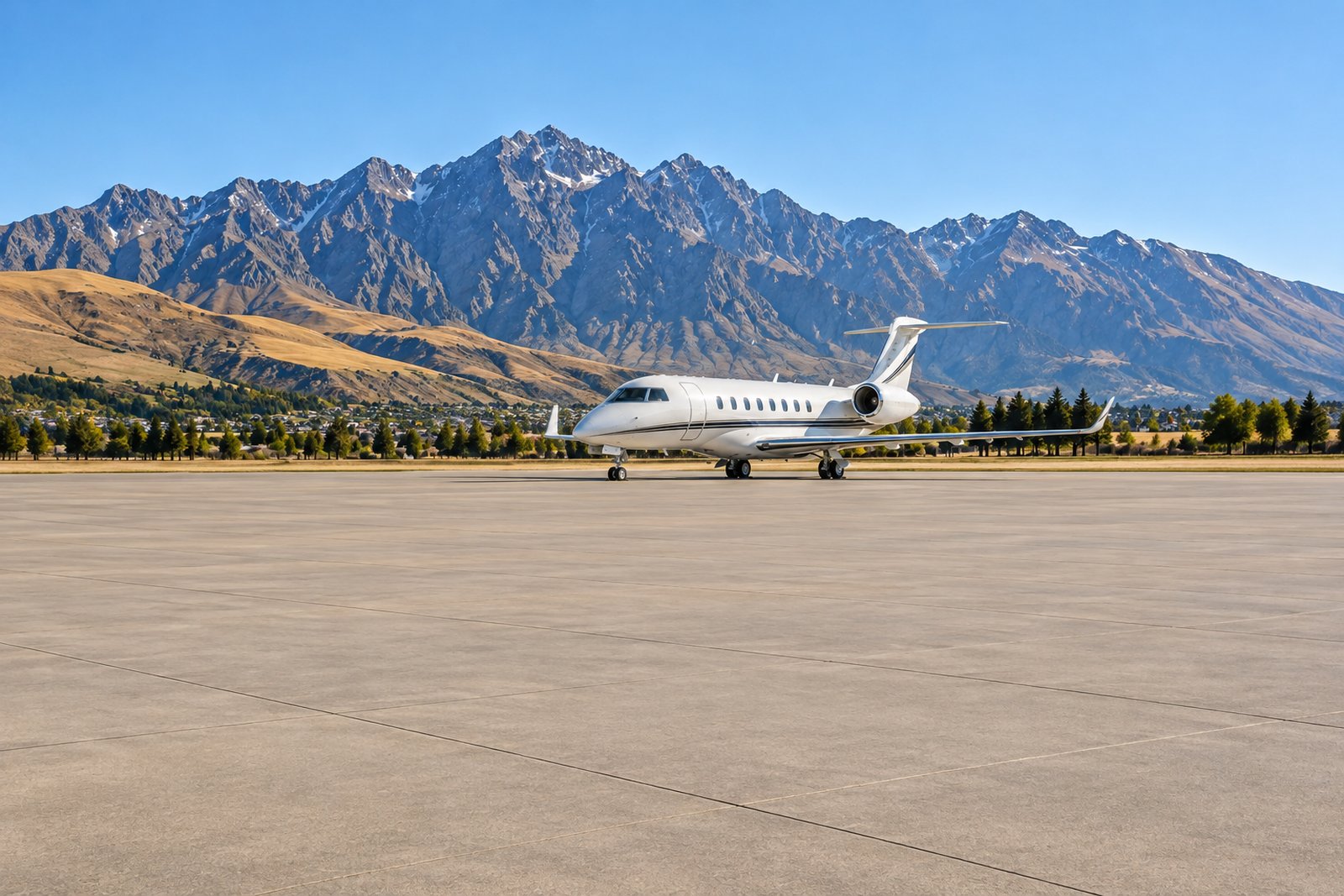
Flying private to Melbourne for the Australian Open 2027 and on to New Zealand: which jets fly nonstop from Los Angeles, why the East Coast trip is built around Honolulu, the curfews at Sydney and Essendon, Australia's charter permissions and insect spray, and New Zealand's one-landing rule for foreign charters.
The Australian Open runs from January 11 to 31, 2027, with the main draw starting on the 17th and the singles finals on the weekend of January 30 and 31. January is high summer in Melbourne and in New Zealand, and a few days at Melbourne Park pair naturally with Sydney or Queenstown. It is one of the longest trips a business jet is asked to make, and one where the airports’ opening hours and two governments’ rules decide the plan as much as the aircraft. Here is how we build it.
How far is it, and which jets fly it nonstop?
Measured on the great circle, Van Nuys to Sydney is about 6,500 nautical miles, and to Melbourne about 6,900. With the usual winds, that is fourteen to fifteen hours in the air, Melbourne being the longer. The aircraft that make it a single flight are the newest of the ultra-long-range class: the Gulfstream G800, the Bombardier Global 8000, the Gulfstream G700 and the Global 7500, with the G650ER on the Sydney run. Real loads and winds cut into published range, so the operator confirms the nonstop on the actual passenger list.
Auckland is closer, at about 5,700 nautical miles from Los Angeles, which brings the Global 6500, the G600 and the Falcon 8X into the picture, usually with a four-pilot crew as well, since the flight runs about twelve hours.
From New York or Florida, no purpose-built business jet reaches Australia without a stop: Teterboro to Melbourne is about 9,000 nautical miles, Palm Beach to Sydney about 8,100, at or beyond even the G800’s published range once winds and reserves are counted. Only a VIP-configured widebody such as a BBJ 787 or an ACJ330neo has that reach. For everyone else, the question is where the stop goes.
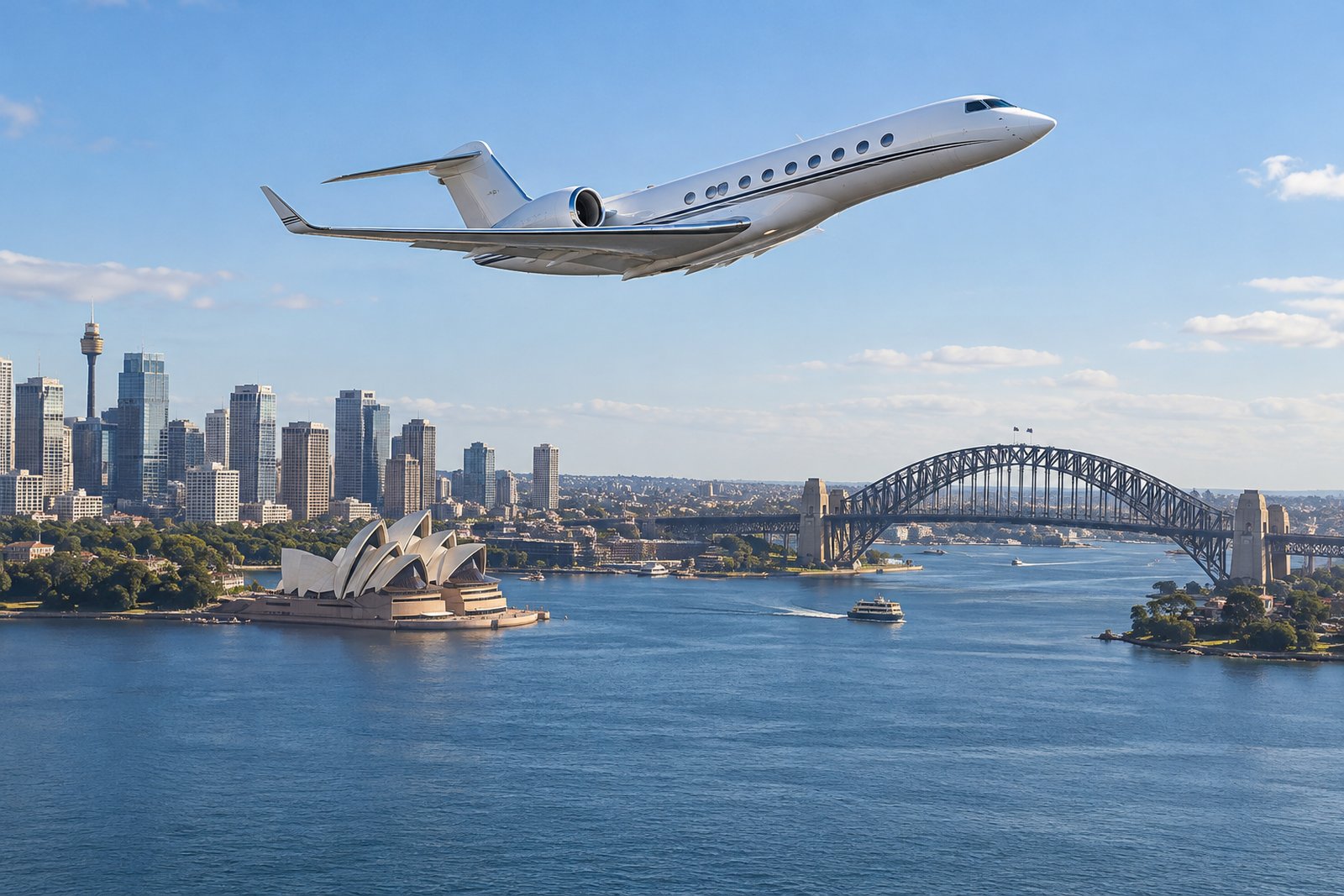
Honolulu: two long days instead of one very long one
The charter operators we work with fly under Part 135 of the federal aviation rules, which cap the time a crew can spend in the air: 10 hours of flight time in 24 for two pilots, 12 hours aloft for three, 16 for four, and the larger crews need a proper bunk for the pilot at rest. A nonstop from Los Angeles to Sydney or Melbourne therefore calls for a four-pilot crew on an aircraft with a real crew rest area.
From the East Coast, Honolulu splits the trip almost in half. Teterboro to Honolulu is about 4,300 nautical miles, and Honolulu to Sydney about 4,400 (Melbourne about 4,800), so each day is nine to eleven hours in the air. That stays within the limits of a three-pilot crew, with a night on Oahu in between. It also opens the trip to more aircraft, provided each has a rest area for the third pilot.
The date line takes a day on the way out. A family leaving Honolulu after breakfast on a Sunday lands in Sydney in the middle of Monday afternoon, local time. We work backward from that arrival time, because at Sydney, Essendon and Queenstown it is the airports’ hours that set the departure.

Arriving in Sydney or Melbourne
Sydney has a curfew from 11 pm to 6 am. A flight should not leave its origin if it would arrive after 11 pm, and an aircraft that arrives before 6 am holds or diverts. Every flight needs a slot, and the business aviation apron takes aircraft only up to 22,000 kilograms (about 48,500 pounds), so a large-cabin jet arranges its parking in advance.
In Melbourne, the international arrival is normally Melbourne Airport at Tullamarine, open around the clock, where the business aviation terminal clears customs, immigration and quarantine with notice. Parking for a visiting aircraft must be approved at least 24 hours before arrival, and during the Open it is worth doing much earlier. Essendon Fields is closer to the city, but it is not a designated international airport: an international arrival there needs approvals arranged ahead, and it has the same 11 pm to 6 am curfew.
Australia’s permissions and the insect spray
A charter flight into Australia on a foreign-registered aircraft needs a permission from the Civil Aviation Safety Authority, which asks for five working days. Any leg inside Australia, Melbourne to Sydney for example, needs a second permission, which also takes five working days and covers seven days at most. So the domestic dates are decided in advance, and if the family wants to roam freely around the country, we can add a local operator for the domestic legs.
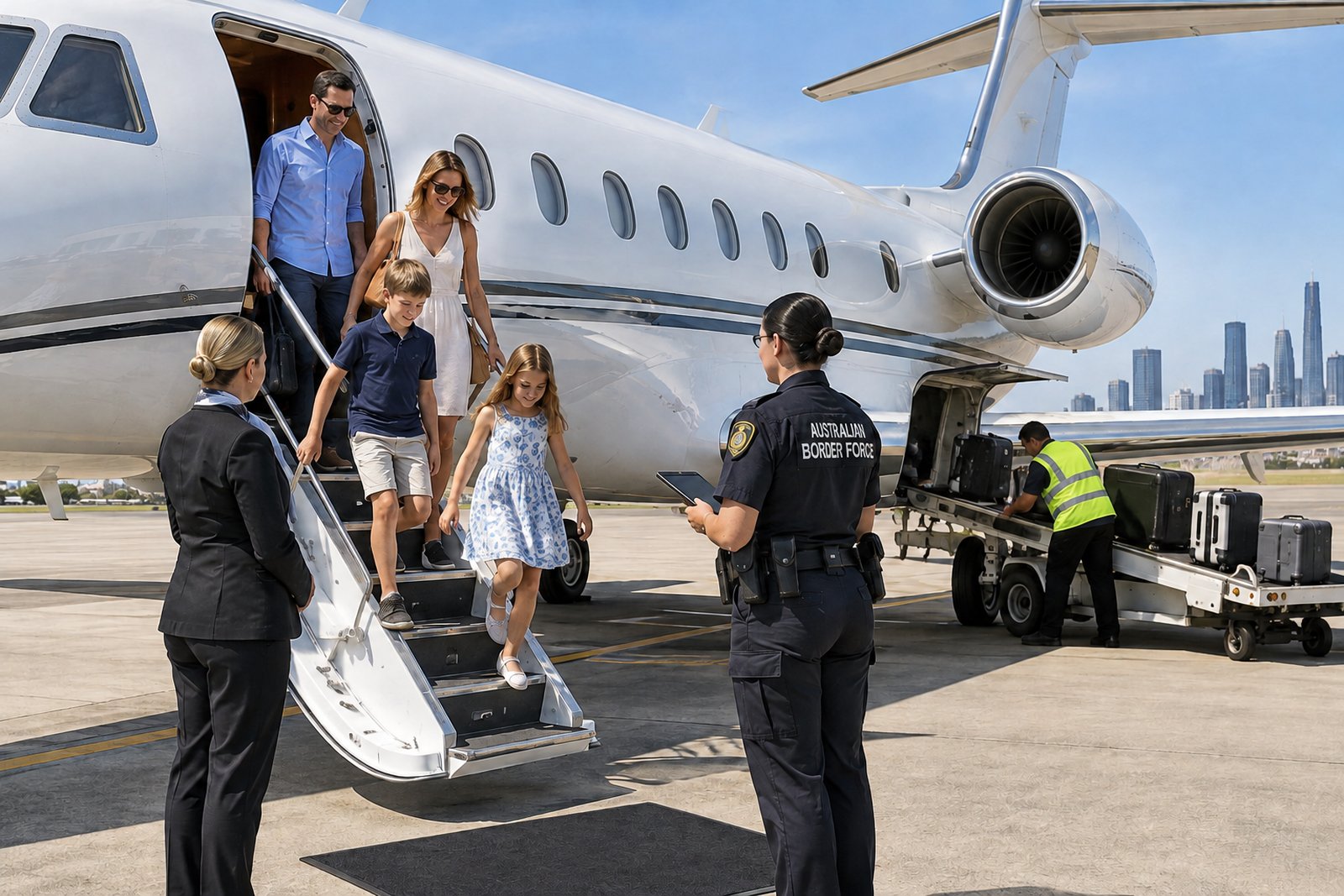
Then there is a rule that surprises most first-time visitors. Every aircraft arriving in Australia or New Zealand must be sprayed against insects. On a charter jet, that usually means the cabin is sprayed with everyone on board and the doors closed, either at the last foreign airport just before departure, or on arrival under the supervision of a biosecurity officer, with everyone staying aboard until it is done. On arrival in Australia, a passenger with a serious medical condition may leave the aircraft before the spraying. We tell families in advance.
New Zealand: one landing for a foreign charter
New Zealand’s rule for foreign charter operators shapes the whole itinerary. Without a New Zealand certificate, which takes about ninety days to obtain, a foreign operator may make one landing and one take-off in the country in any 28 days. A charter jet flown by a foreign operator without that certificate therefore lands once, in Queenstown or Auckland, and leaves from the same airport, so the aircraft usually waits there for the return. The allowance belongs to the operator, not to the trip, so we check that the operator has not already used it elsewhere in New Zealand. Travel inside the country, a flight over to Milford Sound or a hop up to Auckland, goes with a local operator.
Queenstown is one of the six airports where international private and charter flights can arrive. It is open from 7 am to 10 pm, and after-dark operations are limited to four specially certified airlines, so we plan business jet arrivals and departures in daylight. A jet of this size needs a ground handler and a movement request, and the airport has said it may introduce new limits on business aviation during this southern summer. Customs requires arrivals during its working hours; any exception must be approved five working days ahead.
Papers for the family
American citizens need an Electronic Travel Authority for Australia, requested only through the official app; it allows stays of up to three months and is usually granted at once, but it is best in hand before the trip is booked. New Zealand asks for its own electronic travel authority, which should be requested at least 72 hours ahead, and a traveller declaration, which opens 24 hours before the flight to New Zealand and must be done by passport control. Food in the bags must be declared on arrival in both countries.
Plan it now
For the opening week of the Open, the aircraft, the crew and the stop are best settled now, so that the permission applications, the slots and the parking requests all go in before Australia’s Christmas and New Year holidays. A trip for the finals weekend follows the same steps. Write to us at sales@transworldjets.com or request a quote with the dates, the cities and the number of passengers, and we will tell you which aircraft can make the trip and where we would put the stop. If the journey also takes in South Africa, our Cape Town guide covers the other long flight of the season.
Ryan Curtis
Ryan Curtis is the Vice President of Trans World Jets, overseeing charter operations, aircraft sourcing, and client relationships. With over two decades in private aviation brokerage, Ryan focuses on matching clients with the right aircraft for missions ranging from last-minute business travel to multi-leg international tours. He works alongside his brother Evan at Trans World Jets in Jupiter, Florida.
Planning your own charter?
Every mission is different. Reach out for a personalized quote from a broker who handles flights like these every day.