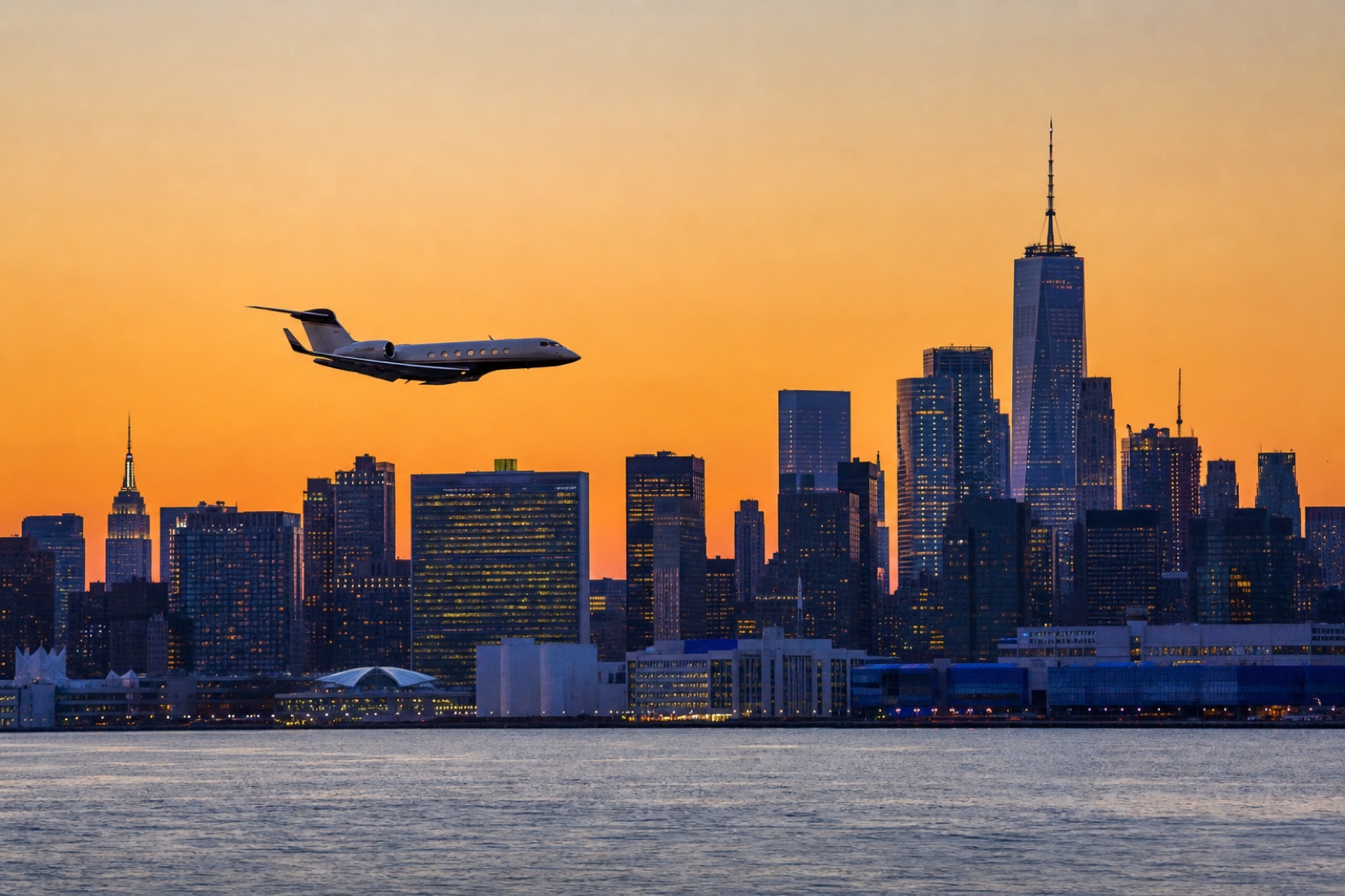
For one week each September, a security bubble rises over Manhattan and business aviation flies through carve-outs. A broker's operational guide to UNGA 2026: the real dates, which run through Monday September 28, the airspace rings and their exceptions, Teterboro's new reservation reality, and the ground game that decides the whole trip.

There is one week every year when the airspace over New York is redrawn at the request of the Department of Homeland Security. The FAA’s flight advisory for the 2025 United Nations General Assembly put it in six words: “Overflights of Manhattan are not permitted.” Temporary flight restrictions climbed to 18,000 feet, transiting aircraft flew assigned transponder codes under permanent radio contact, and the advisory named, one by one, the operations that simply stopped for the week, sightseeing flights among them.
The part almost nobody appreciates: that document is full of holes, and the holes are the point. A two-mile circle around Teterboro, cut out of the restricted core so the airport keeps working. Three-mile carve-outs at Westchester and Republic. Dedicated procedures at Morristown. The sky over New York does not close for the General Assembly. It closes around business aviation, deliberately, and operators who understand the geometry fly all week. The 2026 edition is three weeks away, and its calendar has a trap in it.
The dates that matter, and the one everyone gets wrong
The 81st session opens on September 8. That date is technical, a gavel in a room. The week that closes streets and fills ramps is the high-level week: the SDG Moment on Friday September 18, then the General Debate, when presidents and prime ministers speak, from Tuesday September 22 through Saturday September 26, pausing Sunday, and finishing with a full final day on Monday September 28. Another high-level meeting sits on the 29th.
Two mistakes hide in that calendar. First, a date range of “September 8 to 22” is circulating in operational notices this year. It maps to the session’s opening, not to the leaders’ week; plan around it and you will prepare for the wrong half of the month. Second, the week does not end on Friday. Saturday the 26th is a full debate day, Sunday the 27th is the only quiet day, and Monday the 28th is real. A client who books a “post-UNGA” arrival for that weekend lands in the middle of the machine.
How a head of state arrives, and why it matters to your trip
The General Assembly is a National Special Security Event: Homeland Security requests the restrictions, the FAA writes them, the Secret Service runs the ground. More than 150 heads of state and government attended in 2025. Kennedy is the diplomatic hub, and according to the U.S. Mission’s arrivals briefing for the 2025 session, the major airports gave state flights a two-hour parking limit: drop the delegation, then reposition to an outlying field. Widebody state aircraft needed prior permission days in advance, and Kennedy’s ongoing redevelopment means the parking that once absorbed them is a moving target this year.
Notice what state aircraft cannot do: use Teterboro. The airport’s long-standing weight limit keeps anything over 100,000 pounds out, so a government 747 and a chartered midsize jet never compete for the same concrete. They compete for the same airspace and the same week. A delegation on a widebody faces the same arithmetic as any large group on a VIP airliner: the aircraft that carries everyone cannot use the airport everyone prefers. This is familiar territory: Trans World Jets’ experience includes handling charter flights for government agencies, foreign diplomats and United Nations delegates.
What the restricted sky looks like, if the template holds
As of this writing, the FAA has not published its 2026 advisory. It will arrive late; the 2025 edition landed on September 4 for an event starting the 21st. So you plan on the template, which has been remarkably stable since 2023, and adjust to the NOTAM. If that template holds, expect a security zone over Turtle Bay itself, an inner core of about seven nautical miles reaching 18,000 feet, and an outer area covering the entire New York Class B airspace, with the Teterboro, Westchester and Republic carve-outs keeping those fields open underneath.
Inside that geometry, a normal IFR flight into Teterboro or Westchester stays normal, with two habits added: fly the assigned squawk, and do not linger. The 2025 advisory was blunt about it: “Aircraft may not loiter.” No holding for convenience, no casual repositioning through the zone, and the same advisory even warned crews that security activity could leave collision avoidance systems less sensitive than normal. Helicopter transfers into the Manhattan heliports kept operating, but only screened, only on assigned routes, and never over the island itself. The useful transfer survives; the scenic tour dies for the week.
Teterboro is not closed. It is spoken for.
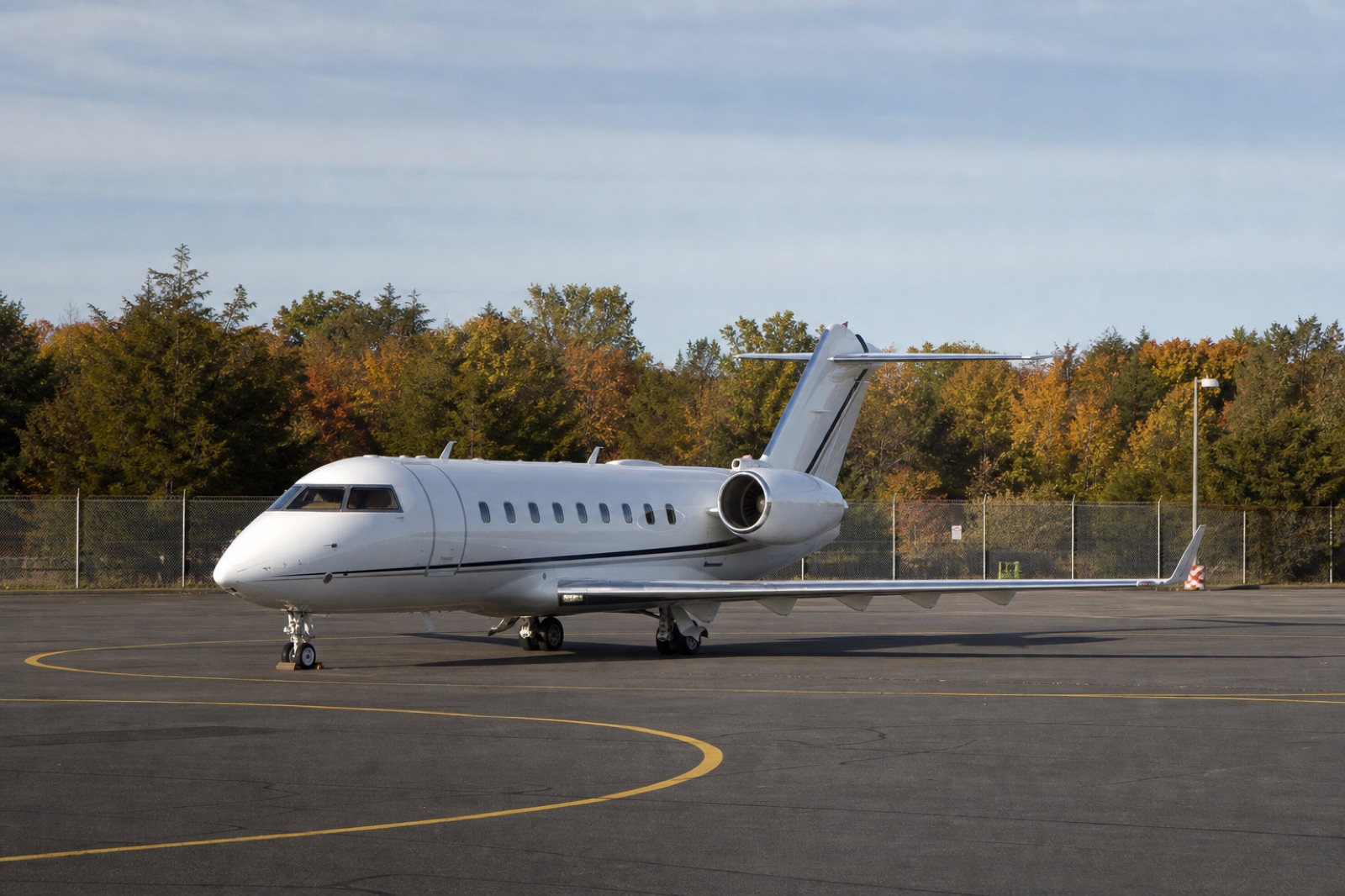
A year ago, the trade press could still note that Teterboro itself carried no use restrictions for Assembly week; the squeeze was airspace and parking. In 2026 that is no longer the whole story. Atlantic Aviation now requires a reservation number for every arrival into Teterboro, full stop. Jet Aviation has already published prior-permission requirements tied to the Assembly period, with meaningful penalties for aircraft that arrive unreserved. Signature’s standing policy asks for a reservation six hours ahead, and the voluntary curfew still asks for quiet between 11 p.m. and 6 a.m.
Zoom out and September has no slack at all. The US Open runs through the 13th, and we wrote about that weekend’s two different New Yorks in detail. Fashion Week carries ramp congestion notices through mid-month. NFL ramp compression begins the 13th and runs into January. The Assembly machinery spools up from the 18th. From the first week of September to the 29th, Teterboro does not get a breath, which is why the reservation number, not the aircraft, is the scarce resource this month.
The ground is the real bottleneck
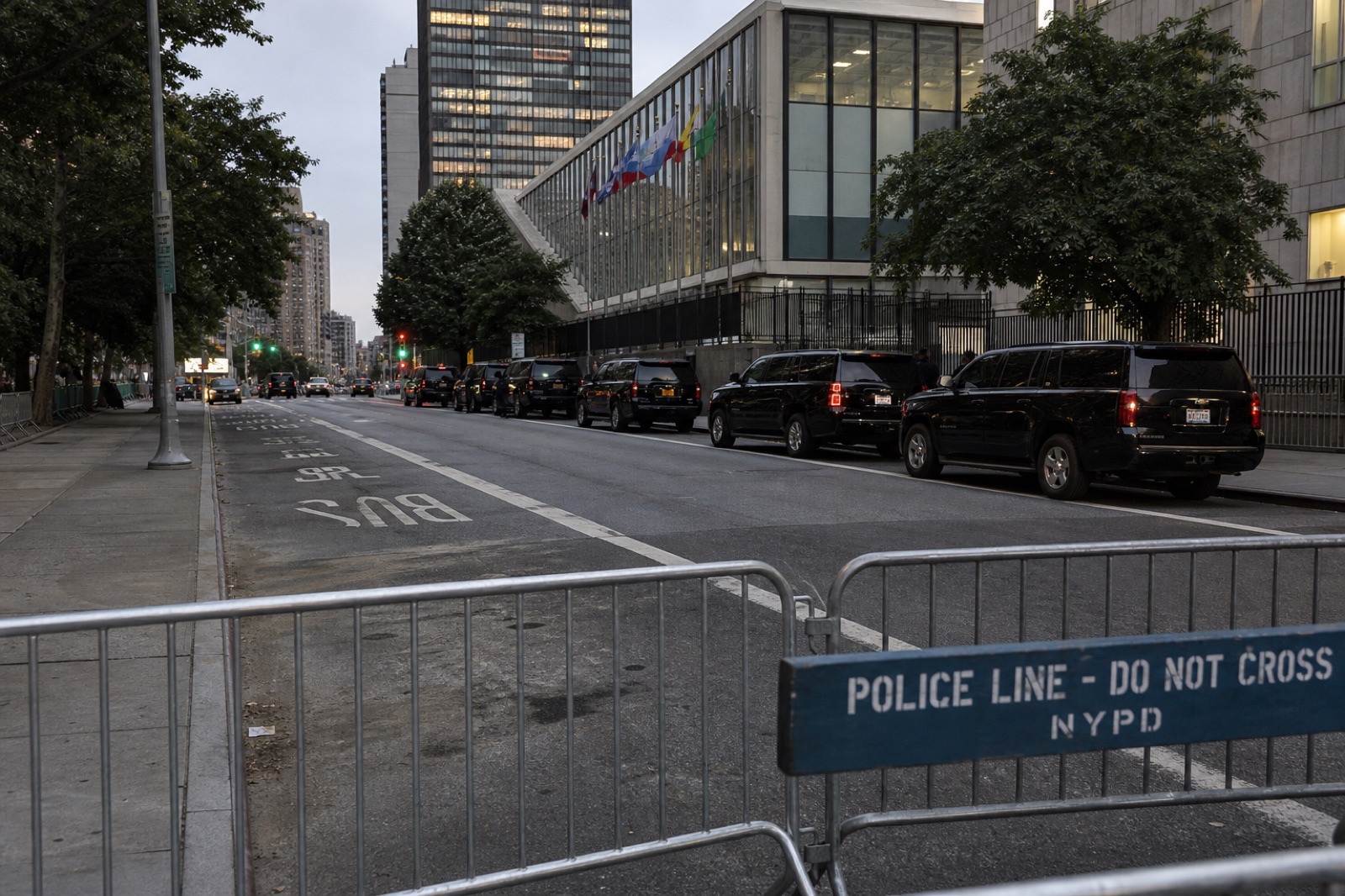
Here is the honest part. City transportation data from the 2025 session put average Midtown traffic below four miles per hour during Assembly week, against a normal of four to six. New York’s former traffic commissioner made the comparison everyone remembers: a senior citizen walks at three. If past sessions are the guide, First Avenue closes outright near the UN, cross streets seal block by block, and motorcades freeze the FDR without notice. In 2026 the week is also Climate Week NYC, September 20 through 27, which draws over 100,000 attendees into the same square mile. Yom Kippur ends at nightfall on Monday the 21st, its exit wave landing on the same evening the delegations mass. And Tuesday the 22nd stacks the debate’s opening day with the corporate summit circuit that now orbits it.
So the flight plan and the ground plan are one plan. A 9 a.m. meeting near Turtle Bay on Wednesday the 23rd is not served by an 8 a.m. landing at Teterboro. It is served by a Tuesday evening arrival into Westchester, a hotel north of the closures, and a driver who knows which avenues still move. On the worst blocks, walking is genuinely competitive, and we say so.

What we tell our own clients
Time the week itself: the arrival wave builds through the weekend of the 19th to the 21st, the crunch runs Tuesday the 22nd through Saturday the 26th, and Sunday the 27th is the one genuine gap before Monday closes hard again. Then secure the concrete before you argue about the sky: reservation numbers and parking at the chosen field, in writing, before the aircraft is sourced. Keep Teterboro for the days the calendar forgives, and let Morristown or Westchester carry the peak; both sat inside protected arrival procedures in the last two published cycles. Screen the helicopter leg properly or skip it. And build the schedule backward from the meeting, not forward from the wheels-down time, because this is the one week in New York where the last eight miles are slower than the last eight hundred.
The Assembly rewrites New York’s airspace one week a year, and publishes the rewrite days before it starts. That is a reason to plan with someone who reads the NOTAM the morning it lands, not a reason to avoid the city. If your September runs through New York, for the Assembly, for Climate Week, or in spite of both, reach Trans World Jets at sales@transworldjets.com or request a quote. We will tell you what your dates genuinely allow, and we will book the concrete before the sky.
Evan Grossman
Evan Grossman is the President of Trans World Jets, a private aviation brokerage based in Jupiter, Florida. With over two decades of experience arranging charter flights for corporate executives, families, and government clients worldwide, Evan specializes in complex logistics, medical evacuations, and VIP airliner charter. He founded Trans World Jets in 2011.
Planning your own charter?
Every mission is different. Reach out for a personalized quote from a broker who handles flights like these every day.