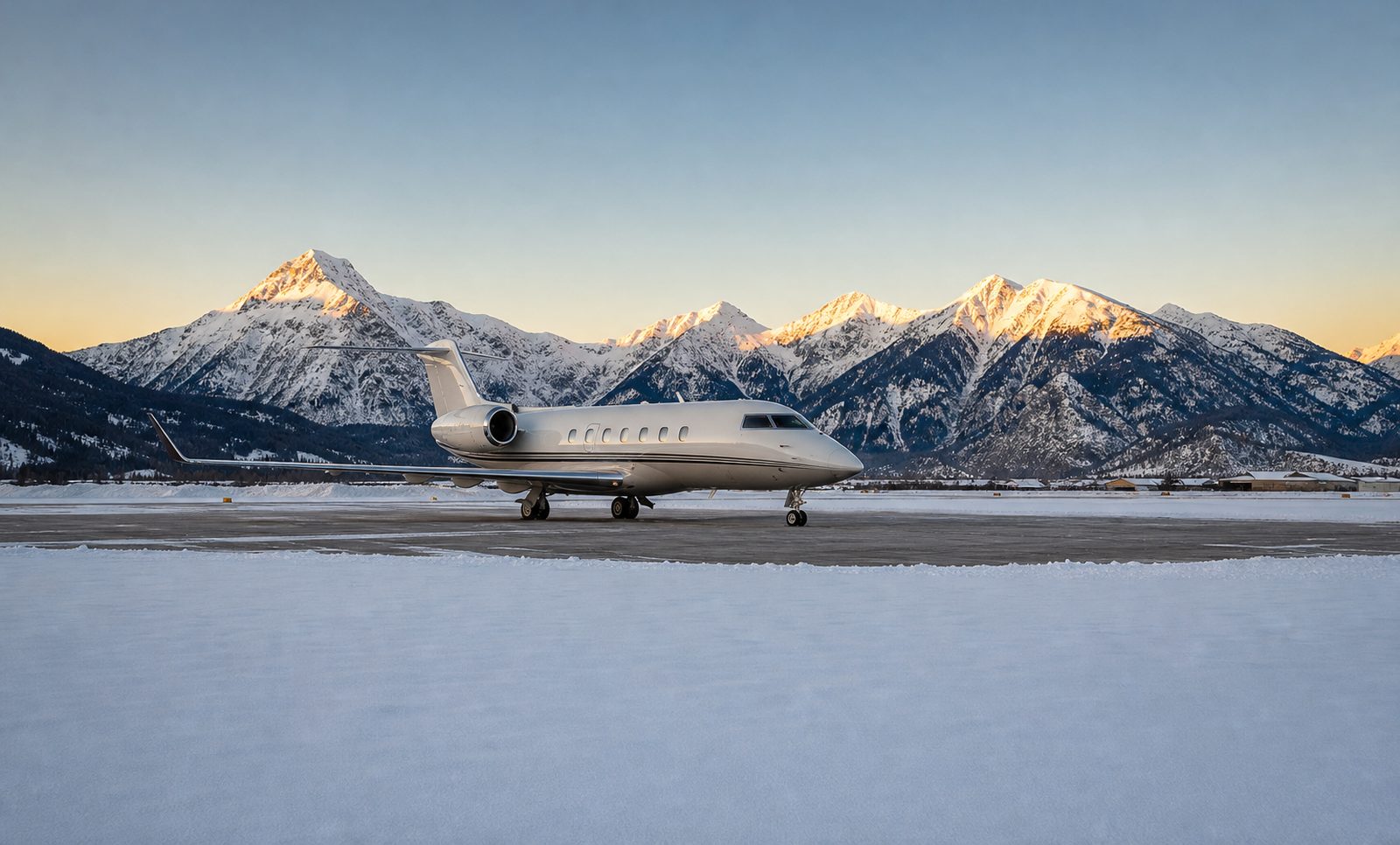
Labor Day is behind us and the FBO at Aspen has already published its holiday compression dates. A broker's guide to Christmas and New Year 2026-27 at Aspen: what the airport's own daily counts say about the real peak days, why there is no standing reservation system at the airport but plenty of ramp to lose, the 95-foot rule, the daylight constraint on a December arrival, and the road everyone shares through Glenwood Springs.

Labor Day was yesterday, and Christmas in Aspen feels like a conversation for October. Yet Atlantic Aviation, the FBO at Aspen-Pitkin County Airport, has published its holiday compression dates: December 24 through January 3, plus the Thanksgiving weekend before it. Aspen Snowmass has set its season, opening on Thanksgiving Day, November 26. And the fractional and jet card programs treat these dates as peak days, with longer notice periods and departure times that can move by hours, which pushes part of that demand into the on-demand charter market, where a charter client shops. The clock has started.
What Aspen’s own numbers say about the peak
By the airport’s own daily counts, the busiest days of December 2025 were December 30, 29 and 26, each with more than 220 movements, against 27 on a quiet Saturday earlier in the month: an eight-to-one spread inside four weeks. The detail that changes plans: Christmas Eve and Christmas Day were the two quietest days of the holiday block, at roughly 60 percent of the traffic of the days on either side. Counts say nothing about the weather or the parking, but when the dates are flexible, those two days deserve a look.
January 3, 2026 carried the highest non-airline count in the airport’s December-to-February data, 235 movements in a day. Last season’s counts do not fix this season’s peaks, but the calendar is known: Christmas and New Year’s Day both fall on a Friday, so the turnover lands on the weekends of December 26-27 and January 2-3. Then Martin Luther King Day, January 18, falls inside the fiftieth Aspen Gay Ski Week, January 17 to 24.
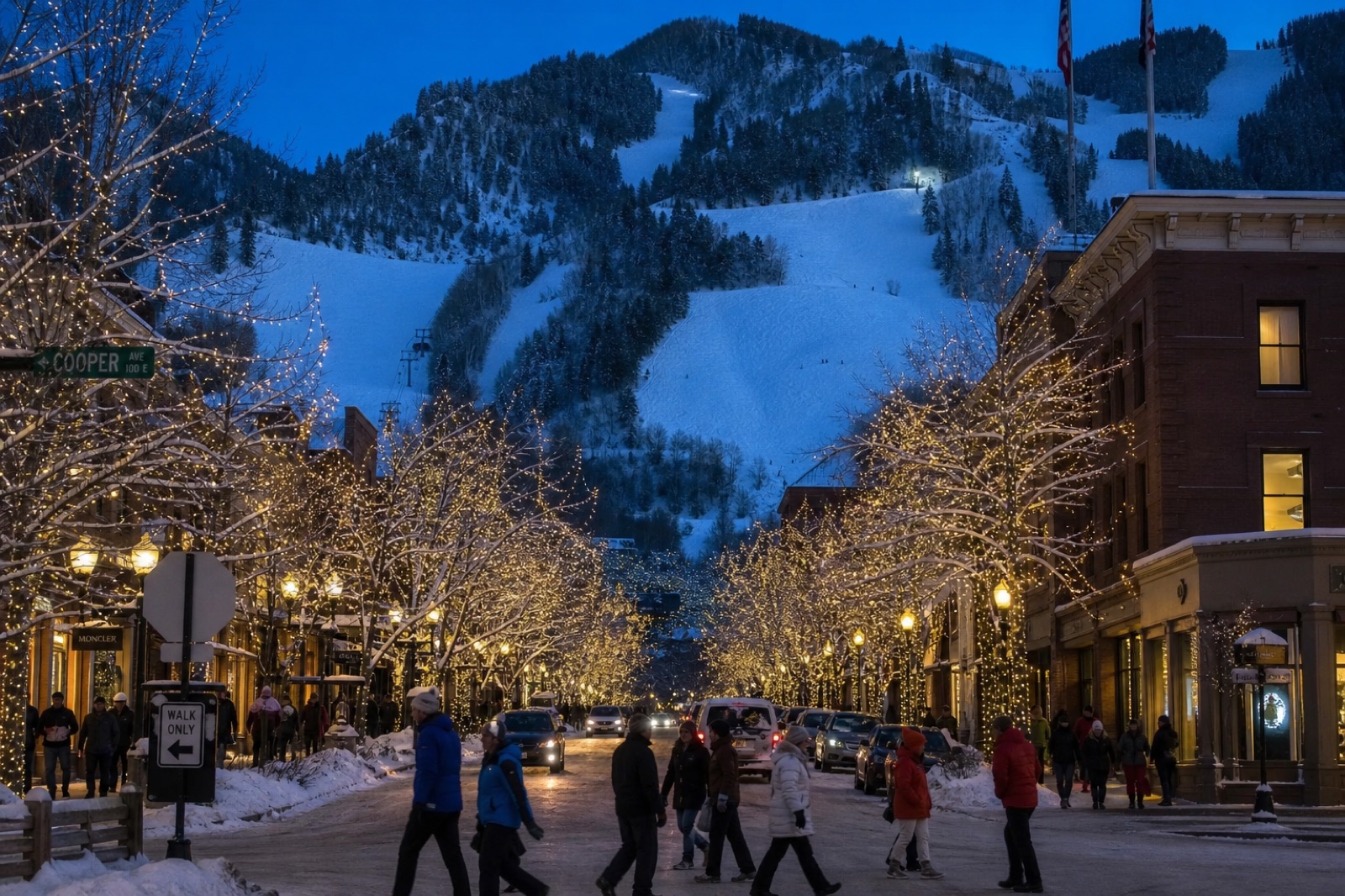
There is nothing to reserve at the airport. There is concrete to lose.
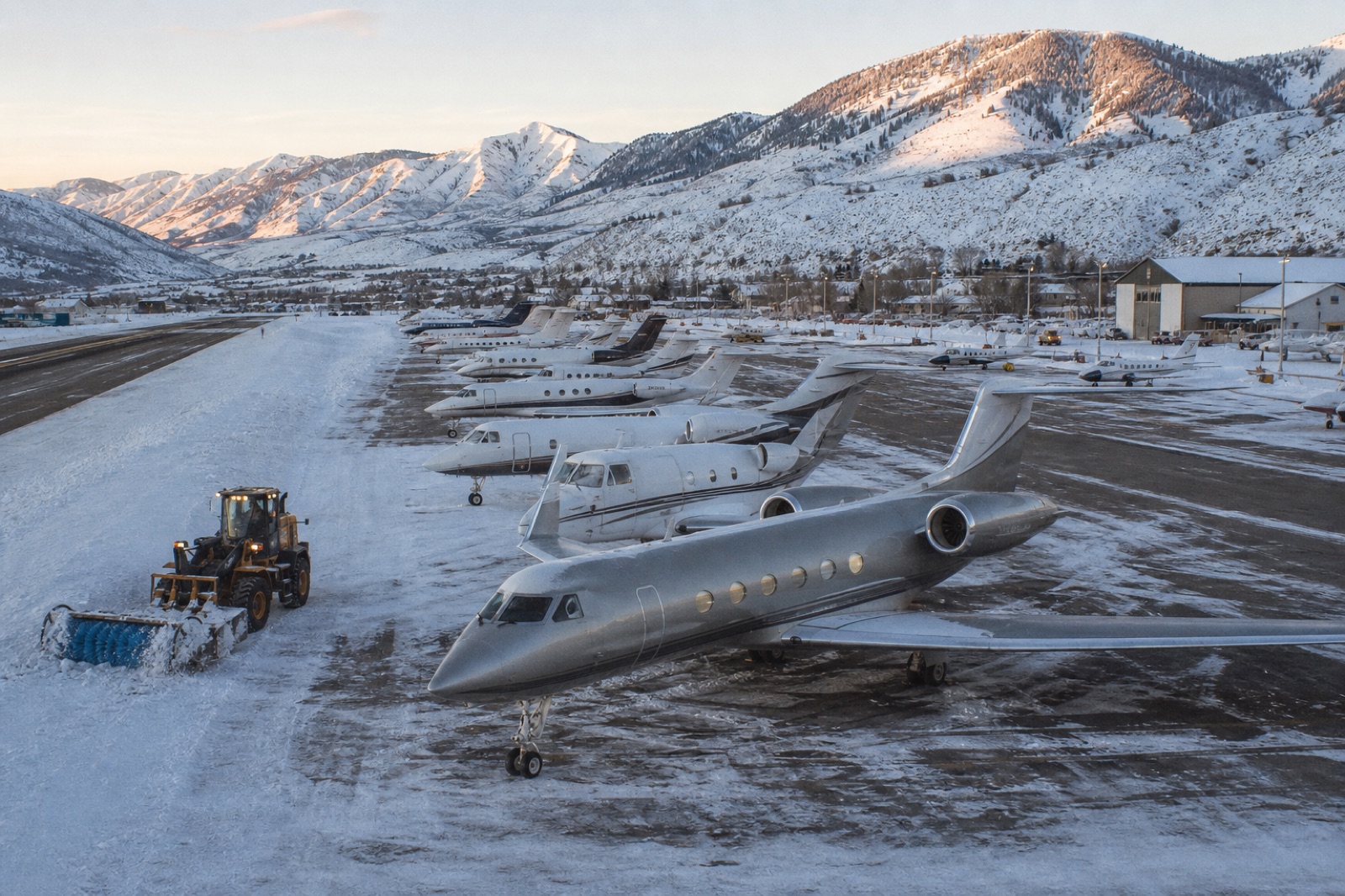
Aspen has no standing reservation system for arrivals and no blanket prior-permission requirement for routine arrivals; departures on Runway 15 need a signed waiver. The FAA can add a temporary holiday reservation program at ski-country airports, and none is posted for this winter as of this writing. The everyday gate at Aspen is physical: ramp space. Atlantic Aviation has said it plainly: there is not enough ramp at Aspen to park all the private jets coming in, particularly during peak periods. In the last published analysis, from 2023, nearly a quarter of private and air-taxi movements were drop-and-go, an aircraft on the ground for two hours or less, and the county now lists keeping the current number of parking spots as a stated goal of its airport rebuild, to avoid more of them.
So landing at Aspen and staying at Aspen are two different bookings. Over the holidays the aircraft that brings you in may fly on to Rifle, Eagle or Denver, park there, and come back for you. It is normal practice, and it shapes the trip: your outbound time depends on a repositioning leg, hangar availability tightens in storms and peak periods, and Atlantic encourages customers to use its Gateway system so it can prepare for arrivals. Settle the parking or repositioning plan with the FBO before the aircraft is sourced, and get whatever remains subject to availability stated in writing.
Ninety-five feet, and the margin is inches
Pitkin County re-enacted its airport code in March 2026 and kept the sentence that matters: no aircraft with a tip-to-tip wingspan greater than 95 feet may operate at the airport. A second rule caps landing weight at 100,000 pounds on dual wheels, but for nearly every business jet it is the wingspan that decides. The Global 5000 through 6500 family sits at exactly 94 feet; the Gulfstream G600 at 94 feet 2 inches. Twelve inches of margin for the Globals, ten for the G600: a larger replacement cannot be assumed to fit.
The runway itself is 8,006 feet long, but the landing distance available is 7,006 feet in either direction, at 7,838 feet of elevation. Aircraft that meet the wingspan limit include the Challenger 350 and 3500, the Citation Latitude and Longitude, the Praetors, the Falcon 7X and 8X, the Gulfstream G500, G550 and G600, and the Falcon 6X, whose 85-foot wingspan makes it one of the largest cabins in production that can legally land there. Meeting the limit is only the first check; the operating carrier still assesses performance, approach eligibility, weather and crew for the specific flight. Above the limit: the Gulfstream G650, G700 and G800, the Global 7500 and 8000, and the Boeing and Airbus VIP airliners. For owners who travel in those aircraft, Eagle is the arrival airport for an Aspen trip. The limit stands until the runway is rebuilt, and that is now scheduled: the airport closes on April 4, 2027 and stays closed until November 19, roughly 229 days. The closure does not touch Christmas, New Year or the January and February peaks, though it overlaps the last two weeks of the resort season, advertised through April 18. The new limit will be 118 feet, not unlimited. This is the last holiday season under the old runway.
After about 5:15 p.m., Aspen is visual only
Aspen has no ILS. It has two circling-only instrument approaches and one charted visual, and all three carry the same note: not authorized at night. On the LOC/DME-E approach, the circling minimums for Category C aircraft, where most midsize and large-cabin jets sit at approach speed, are 3,122 feet above the airport with three miles of visibility: the crew must have the runway environment in sight from that height or go around. Category D is not authorized at all, and the charted descent angle is 6.59 degrees against a conventional three.
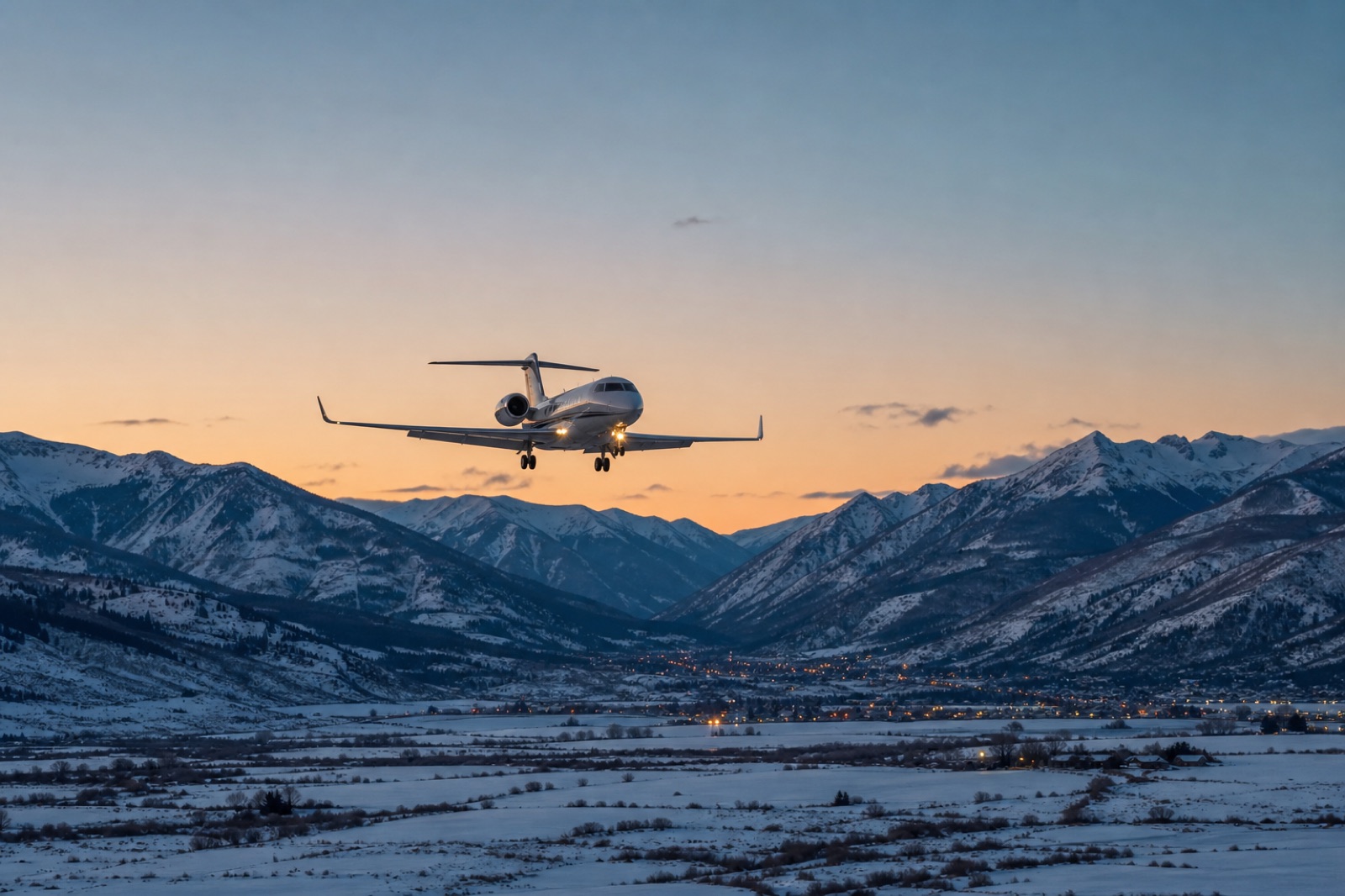
In late December the sun sets around a quarter to five, and night, for the charts and for the county’s rules alike, begins roughly half an hour later. That is not a closing time: the airport stays open until 11 p.m. But from about 5:15 the published approaches are off the table, an arrival has to be flown visually, and the airport’s own rule for visual operations after dark asks for an instrument-equipped aircraft, an instrument-rated captain, and at least one Aspen takeoff or landing by that captain in the preceding twelve months. Aspen averages more than eleven days of snowfall in December. That argues for daylight margin in the plan: aim for a mid-afternoon arrival, and treat it as a planning target, not a weather guarantee. Aspen’s place on the FAA’s list of special pilot-qualification airports is one more reason to confirm the operating carrier’s crew qualifications early.
A clear runway is no guarantee. On December 26, 2021, only six of 37 scheduled airline arrivals reached the field, and the airport director said it outright: the runways and taxiways had been kept clear; it was the snow in the air, the visibility and the wind. In December 2023, by contrast, nearly 96 percent of airline flights were neither diverted nor cancelled, and almost two holiday weeks passed without a single cancellation. Plan for the first, hope for the second.
Plan B is a road through Glenwood Springs
Eagle County, about 70 miles and 90 minutes away on a valley-floor road, has a 9,000-foot runway built for aircraft far larger than Aspen allows, and it is the answer for the flagships that cannot use Aspen at all. Rifle is the closest, roughly 75 to 90 minutes in clear conditions, with Atlantic Aviation on that field too. Grand Junction, two hours and a quarter out, is where the airlines divert. Evan wrote about the day we chose Eagle for a last-minute February mission.
What the map does not show is that for the entire season there is one road into Aspen from the east. Independence Pass typically closes on or near November 7, and every alternate then shares the final run up Highway 82 through Glenwood Springs. Transfers from Eagle and Denver also cross Glenwood Canyon on Interstate 70, which the state closes for rockfall on short notice; Rifle and Grand Junction reach Glenwood from the west and avoid it. Colorado’s traction law applies to the cars you send, and a diverted charter client is not met by a resort shuttle; the ground recovery is ours to arrange. So the cars and the ground contingency are arranged before departure, and the alternate is planned in advance, with the crew free to reassess it as conditions change.
What we tell our own clients
Name the dates now; for Christmas week, aim to have the aircraft under contract before October, with New Year’s close behind. Choose the aircraft for the wingspan first and the cabin second. Build the day to land by mid-afternoon, with the alternate and the cars booked before the aircraft is, and look hard at December 24 and 25, the lighter days in the counts. Expect the aircraft to reposition after dropping you, and book the return around that leg. And keep a backup plan for the aircraft itself, because at Aspen the substitute has to fit the same 95 feet.
Aspen at Christmas is not hard because the mountain is remote. It is hard because a short list of physical facts, ramp, wingspan, daylight and one road, all point at the same holiday window. If your holidays run through Aspen, reach Trans World Jets at sales@transworldjets.com or request a quote. We will tell you what your dates allow, and set out the flight, the parking or repositioning, and the ground transfer together, with anything still subject to availability made explicit.
Ryan Curtis
Ryan Curtis is the Vice President of Trans World Jets, overseeing charter operations, aircraft sourcing, and client relationships. With over two decades in private aviation brokerage, Ryan focuses on matching clients with the right aircraft for missions ranging from last-minute business travel to multi-leg international tours. He works alongside his brother Evan at Trans World Jets in Jupiter, Florida.
Planning your own charter?
Every mission is different. Reach out for a personalized quote from a broker who handles flights like these every day.