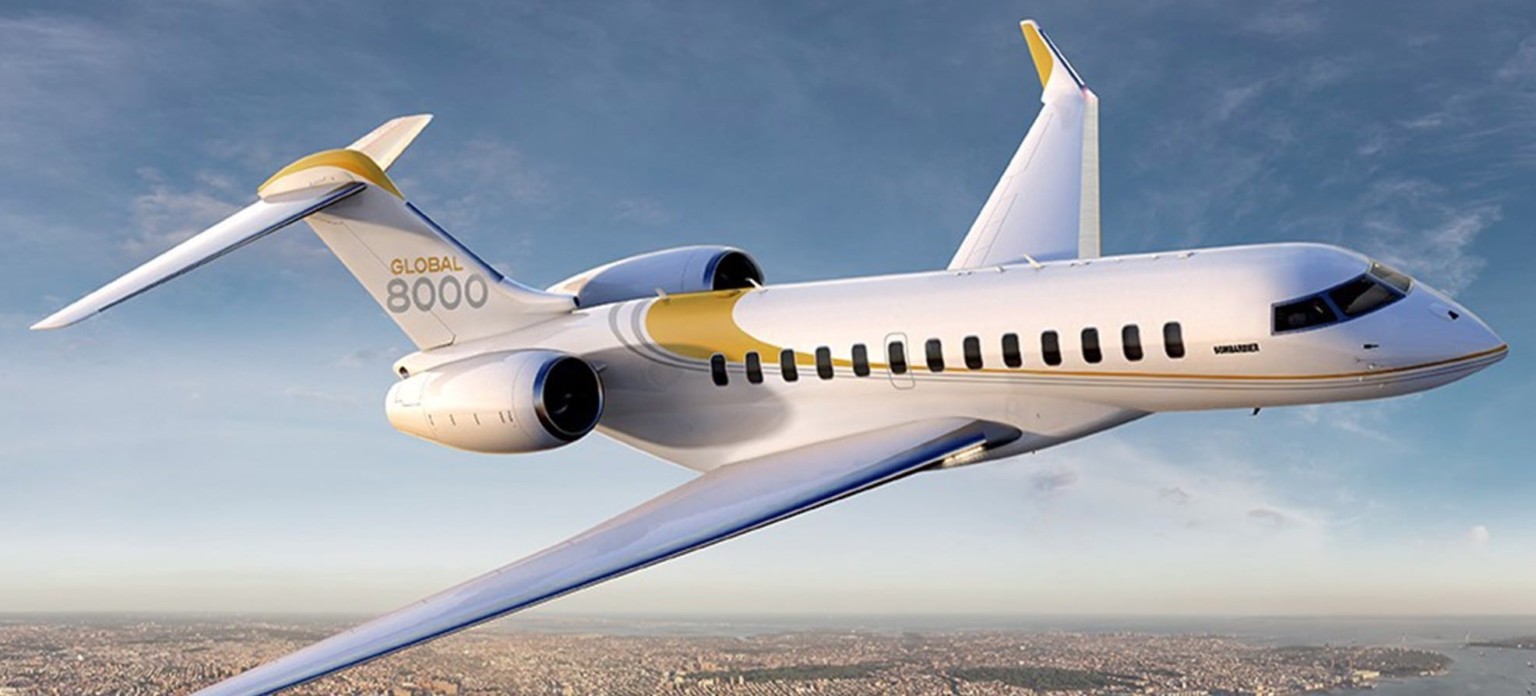
Bombardier's Global 8000 flew Montreal to Nice in just over six hours to reach the Monaco Grand Prix. Here is what its speed and range actually change for the client who charters one, and what is still just marketing.

On 5 June 2026, Bombardier announced that a Global 8000 had set a speed record on a transatlantic flight, carrying passengers from Montreal to Nice in just over six hours, in time for the Formula 1 Grand Prix de Monaco. “The Global 8000 aircraft is truly in a class by itself when it comes to speed, luxury and performance,” said Stephen McCullough, the company’s Executive Vice President of Engineering and Product Development.
We pay attention when an aircraft maker sets a record, but not for the reason the press release wants. Most speed records are a marketing exercise: a featherweight aircraft, a perfect jet stream, no real payload, a route chosen because the tailwind was forecast to cooperate. They tell you almost nothing about the trip your principal will actually take. This one is different in a few specific ways that matter to the people who charter the Global 8000, and we want to separate what is real from what is not.
What actually happened, and what it proves
The aircraft is genuinely fast. The Global 8000 is certified to a top speed of Mach 0.95, which makes it the fastest civil aircraft since Concorde. That is not a claim Bombardier needed a record flight to make, because it is built into the airframe. What the Montreal to Nice run demonstrated is that the speed holds up on a real eastbound crossing with passengers aboard, on exactly the kind of corridor our clients fly into the Riviera in late spring.
Six hours and change from Montreal to the Côte d’Azur is a useful data point. The route is roughly 3,300 nautical miles. On a westbound return, against the wind and with no jet stream to lean on, the same trip runs longer, and that asymmetry is the honest part most coverage leaves out. But the headline holds: on the leg that matters for a North American principal heading to Europe in season, this aircraft removes time that money usually cannot buy back.
Why Mach 0.95 is worth more than it looks
Speed compounds. On a one hour hop, the difference between Mach 0.85 and Mach 0.95 is a rounding error. On a seven or eight hour crossing, it is the difference between landing in time for a dinner and landing in time for breakfast the next day.
The number that we actually quote to clients is range at speed. The Global 8000 carries an 8,000 nautical mile range, and it does not have to slow down to its most economical cruise to get there. That combination is the point. It is what lets the aircraft hold a high cruise speed across a long crossing instead of trading the speed away for the distance. For a principal who values arriving rested and on schedule above every other consideration, that trade is the entire purchase.
It is also a quieter, more comfortable way to spend those hours. The cabin pressurizes to an altitude of 2,691 feet while cruising at 41,000 feet, which is among the lowest in the category and is the single specification most responsible for a passenger stepping off without the dull headache of a long flight. Four separate living spaces and a full-size kitchen are the part of the brochure that is genuinely true.
The range you do not have to think about
Range matters less for the trips it makes possible and more for the trips it makes effortless. The Global 8000 flies New York to almost anywhere in Europe, the Gulf, or East Asia without a fuel stop, and it does the same from the West Coast to most of those destinations. New York to London, New York to Paris, the full Côte d’Azur corridor: none of these are a question of whether the aircraft can make it, only of slot and parking on the other end.
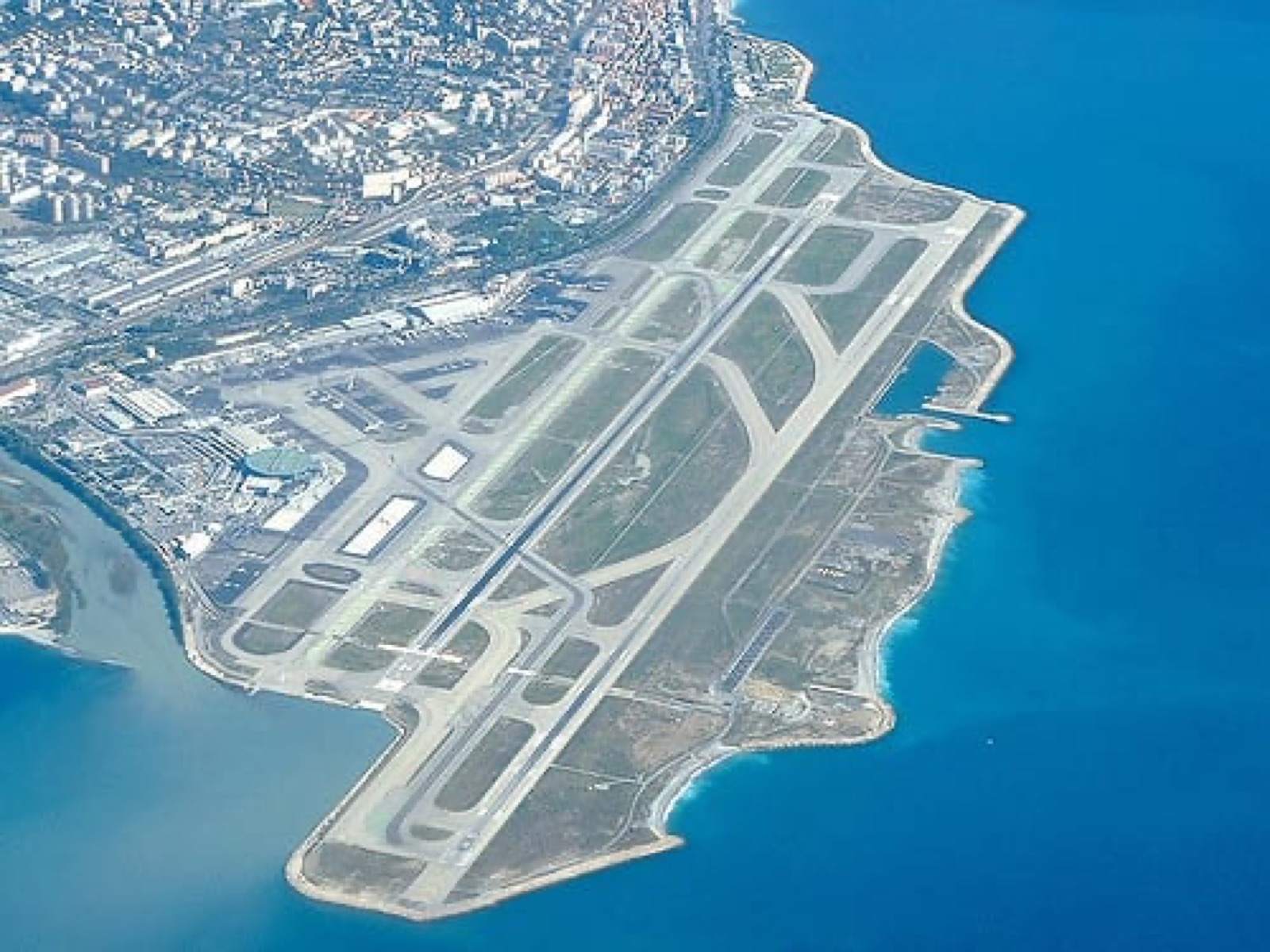
There is a second, less obvious figure that we find more interesting than the speed record. Bombardier states the Global 8000 can operate from up to 30 percent more airports than its closest competitor. For an ultra-long-range jet, short-field and hot-and-high capability is rare, and it is exactly what turns a constrained destination into an option. It is the difference between landing your principal where they actually want to be and landing them an hour away at the only field long enough to take a heavier aircraft. On the kind of restrictive runways we wrote about in our Riviera window analysis, that flexibility is not a luxury, it is the plan.
Where it fits in a real itinerary
We are not in the business of selling an airframe. We arrange whichever aircraft is right for the mission, and for a specific profile of trip the Global 8000 is now the strongest answer on the market. That profile is a long crossing, a principal or a family who place a premium on time and comfort, and a destination at the demanding end of the runway spectrum.
A US or Canadian family heading to the South of France in season is the textbook case. A government delegation crossing the Atlantic on a tight schedule is another. A founder who needs to be in two continents in two days, awake for both, is a third. In each of these, the speed is not a vanity statistic. It is recovered hours on the ground, where the actual purpose of the trip happens.
The availability reality
This is the part the record flight does not address, and the part we get asked about most. New aircraft are scarce, and the Global 8000 is no exception. NetJets is the launch customer with 24 of the type on order, and the first deliveries entered service in late 2025. VistaJet has announced the conversion of 18 of its existing Global 7500 fleet to Global 8000 specification, at a cadence of roughly two aircraft per month through the end of 2026.
What that means in practice is that charter availability exists but is thin, and it is disproportionately committed to the clients who confirmed early. For peak corridors and peak dates, the aircraft that are flying are largely spoken for weeks ahead. If a Global 8000 is the right answer for a trip you are planning, the time to have that conversation is well before the calendar tightens, not the week of.
If you want our team to tell you honestly whether the Global 8000 is the right aircraft for a specific crossing, or whether a Global 7500, a G700, or a Falcon fits the mission better and sooner, reach us at sales@transworldjets.com or request a quote. We will give you the real answer, including when it is not the fastest jet that wins.
Ryan Curtis
Ryan Curtis is the Vice President of Trans World Jets, overseeing charter operations, aircraft sourcing, and client relationships. With over two decades in private aviation brokerage, Ryan focuses on matching clients with the right aircraft for missions ranging from last-minute business travel to multi-leg international tours. He works alongside his brother Evan at Trans World Jets in Jupiter, Florida.
Planning your own charter?
Every mission is different. Reach out for a personalized quote from a broker who handles flights like these every day.