
Empty Legs Explained: How One Client Flew NYC to Miami for 40 Percent Off (and the Catch)
Empty leg flights are one of the most misunderstood pricing concepts in private aviation. Most clients either overvalue them or dismiss them entirely. Here is a real example of how we used an empty leg to cut a client's NYC to Miami flight by 40 percent, including the tradeoffs nobody warns you about.
Empty legs are one of those private aviation concepts that get mentioned in every magazine article about “how to fly private on a budget” and are almost always explained incorrectly. I want to walk through a real mission we ran where we used an empty leg to save a client nearly 40 percent on a NYC to Miami flight, and then I want to tell you the three things that can go wrong with empty legs that most articles leave out.
What an Empty Leg Actually Is
When a charter operator flies a client from New York to Miami, the aircraft has to get to New York in the first place and then get somewhere else after Miami. Those non-revenue flights are called positioning legs or repositioning flights. From the operator’s perspective, they represent pure cost: fuel, crew time, landing fees, zero revenue.
To offset some of that cost, operators try to sell those empty positioning legs at a discount. A repositioning flight that costs the operator $12,000 in fuel and crew becomes a $8,000 revenue opportunity if they can find a charter client who wants to fly the same route on the same day, even at a discount from the regular price.
This is the empty leg. Not a free flight. Not a half-price miracle. A discounted sale of a flight the operator already has to run regardless of whether a client is on board.
The Client Request
A Manhattan-based executive needed to be in Miami the following Tuesday morning for a 10 AM meeting. He wanted to fly down Monday evening, sleep in Miami, handle the meeting, and return late Tuesday afternoon. Flexible on exact departure times within a 3-hour window both ways. Group of 2, minimal luggage. Light jet was fine.
He had already received a quote from another broker for a direct Monday evening flight on a Citation CJ3: $18,500 one-way. The return quote for Tuesday afternoon was $16,200. Total round trip: $34,700 plus taxes.
He asked me if I could do better. Here is what I found.
The Empty Leg Match
When I checked our operator database, I noticed that a Phenom 300 operated by a Florida-based company had a scheduled empty leg on Monday evening from Teterboro to Fort Lauderdale. The operator had flown a client to Teterboro that afternoon and needed to reposition the aircraft back to its Florida base for a Tuesday morning departure. They had listed the empty leg at $8,900.
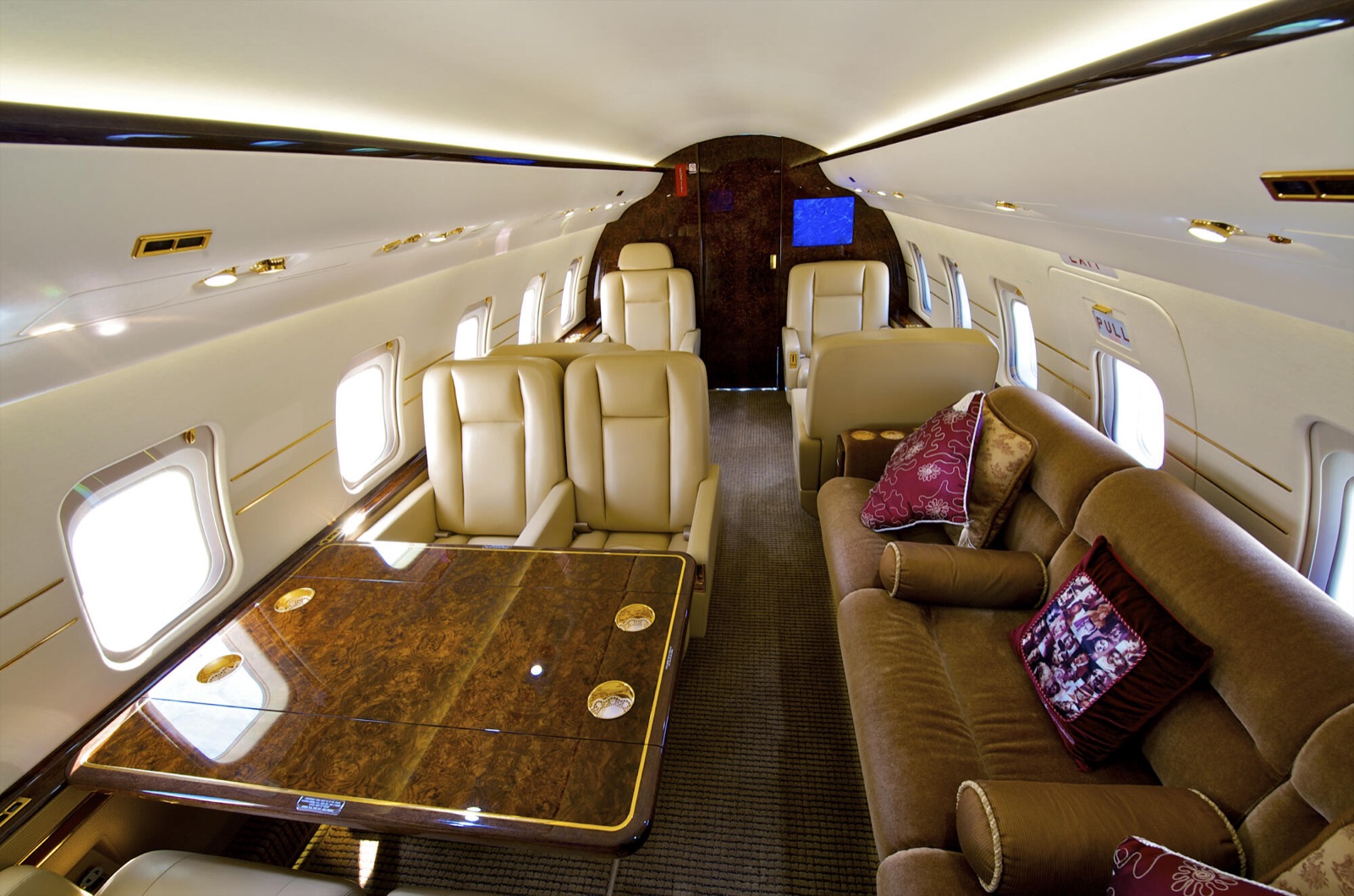
Fort Lauderdale is 25 miles north of Miami. A car transfer from the Fort Lauderdale FBO to downtown Miami takes about 40 minutes. The Phenom 300 is a light jet with cabin dimensions nearly identical to the Citation CJ3 the other broker had quoted. Same passenger experience, same baggage capacity, same speed, same comfort level.
If we took the empty leg down, the client would land in Fort Lauderdale at around 9 PM Monday, transfer to his hotel in Miami Beach by 10 PM, sleep, and be at his 10 AM Tuesday meeting without issue.
For the return leg, I found a second opportunity. A different operator had a scheduled flight from Miami-Opa Locka to Teterboro on Tuesday at 3 PM. It was not technically an empty leg because they had a client on the outbound portion (their original flight), but they had space for additional passengers on the return if they discounted. They offered $11,200.
Total round trip using these two opportunities: $20,100. The other broker’s quote was $34,700. Savings: $14,600, which is 42 percent.

The Three Catches Nobody Mentions
This is the part I wish every “how to save money on private jets” article would actually cover. Empty legs come with real risks that change the value calculation.
Catch 1: The flight can be canceled if the primary charter cancels.
Empty legs exist because an operator has a primary paying charter that creates the positioning need. If that primary charter gets canceled, the empty leg disappears too. The aircraft might not fly at all.
In practice, this means an empty leg you book 5 days in advance has maybe a 10 to 15 percent chance of being canceled by the operator. Sometimes as high as 25 percent in slow seasons when the primary charter is a flexible corporate booking.
If the empty leg gets canceled, the operator will usually try to find you alternative aircraft at similar pricing, but they are not obligated to. If it is peak season and no alternatives exist, you might have to rebook at normal rates on short notice. Expensive.
Catch 2: The departure time is not fully flexible.
Empty legs have to match the operator’s positioning schedule. If the aircraft needs to be in Fort Lauderdale by 9 AM Tuesday for the next booking, your Monday evening empty leg cannot depart late or reroute through another airport. You are locked into the operator’s timing.
For clients with hard deadlines this can be a problem. In this case the client’s meeting was 10 AM Tuesday, and the empty leg had the aircraft landing at 9 PM Monday. That gave him roughly 13 hours of buffer, which is generous. If his meeting had been at 7 AM Monday morning, a Sunday evening empty leg would not have been an option because positioning rarely happens on Sunday nights.
Catch 3: The route might not be exactly where you want to go.
Our client was fine landing in Fort Lauderdale instead of Miami because the drive was short and his hotel was north of the city. Another client flying into Miami for a Brickell meeting might not be fine with a 40-minute transfer at peak rush hour. Empty legs are take-it-or-leave-it on the departure and arrival airports.
This means when you search for empty legs, you are really searching for a specific route on a specific date at a specific time. Most searches will return zero results. Roughly 5 percent of requests will have a perfect match. The rest of the time you end up paying normal charter rates.
The Actual Cost Breakdown
Here is what the final invoice looked like for this mission:
- Outbound Monday evening empty leg (Teterboro to Fort Lauderdale on Phenom 300): $8,900
- Return Tuesday afternoon discounted charter (Opa Locka to Teterboro on Citation CJ3): $11,200
- Federal excise tax (7.5%): $1,508
- Ground transportation Fort Lauderdale to Miami Beach hotel: $280
- Ground transportation Miami hotel to Opa Locka: $260
- Catering (light snacks both legs): $400
- Final total: approximately $22,548
Against the original quote of $34,700 plus taxes (which would have been roughly $37,300 all-in), the client saved approximately $14,750. That is 40 percent off the original broker quote.

When Empty Legs Make Sense and When They Do Not
After running hundreds of these over the years, here is the honest framework I give clients.
Empty legs work when:
- Your dates are flexible by a day or two in each direction
- You can accept an alternate arrival airport within reasonable driving distance
- You are not on a tight schedule with a hard deadline in the first few hours after landing
- You have a backup plan in case the flight cancels (rescheduling, flying commercial, etc.)
- You are flying on a popular route like NYC to Miami, LA to Las Vegas, or Teterboro to Palm Beach
Empty legs do not work when:
- You have a fixed meeting or event you cannot reschedule
- You need a specific aircraft type (certain clients have medical needs or require specific cabin dimensions)
- Your dates are locked and the operator pool has nothing matching
- You are flying to a less-traveled destination where no positioning naturally happens
- The savings are small (under 15 percent) and the cancellation risk outweighs the benefit
My Rules for Clients Who Ask About Empty Legs
-
Ask about them, but do not rely on them. I always search for empty legs for every quote I run, and tell the client if I find one. But I never build a trip around an empty leg that cannot fall back to a regular charter.
-
Understand that the quoted price is not the final price. If an empty leg gets canceled, the operator might offer a replacement at normal rates. Know your ceiling before you say yes.
-
Pay close attention to the departure airport and arrival airport. Sometimes a 30-minute drive is fine. Sometimes it is not. Think about the end-to-end trip, not just the flight.
-
Ask the broker what happens if the flight cancels. A good broker will already have a plan and can tell you what it costs. If your broker cannot answer this clearly, that is a warning sign.
-
Do not confuse empty legs with “deadhead flights” or other terms. They are all the same thing in practice, just different industry vocabulary. Operators use all three interchangeably.
Empty legs are a legitimate way to save money on private aviation, but only for the right trip at the right time. If you have some flexibility and want to know if one of your upcoming trips is a good candidate, feel free to reach out and I can run the search for you.
Evan Grossman
Evan Grossman is the President of Transworld Jets, a private aviation brokerage based in Jupiter, Florida. With more than 15 years of experience arranging charter flights for corporate executives, families, and government clients worldwide, Evan specializes in complex logistics, medical evacuations, and VIP airliner charter. He founded Transworld Jets in 2011.
Planning your own charter?
Every mission is different. Reach out for a personalized quote from a broker who handles flights like these every day.